Metrc vs. BioTrack for Operators in 2026
A straightforward comparison of Metrc and BioTrack, the two big track and trace systems in North American cannabis, plus what their 2025 partnership actually changes for operators
If you’re running a legal cannabis business in North America, you’re using one of two systems to track your product: Metrc or BioTrack. Most articles about the two treat the choice as already made for you by whatever your state requires, which is true, but it skips over what matters day to day. How do these systems behave differently once you’re using them, what quirks should you expect, and what does a recent partnership between the two companies actually mean for you.


The basics
Metrc, short for Marijuana Enforcement Tracking Reporting Compliance, is the more widely used system across legal cannabis states. It tags plants and packages with RFID chips (Radio Frequency Identification, a tiny wireless tag that lets a scanner read information without physical contact) and reports everything through a state run portal.
BioTrack is the other major system, used by a smaller group of states, some of which have been running it longer than certain Metrc states have existed. The core idea is similar, tagging plants and packages and reporting to the state, but the way data is set up and the software built around it differ.
For most operators, your state decides which one you’re stuck with. There’s usually no picking and choosing at the licensing stage.
Where the real differences show up
Most online debates about Metrc versus BioTrack ask which one is “better,” which isn’t the right question since you don’t get to choose anyway. The more useful question is what to expect once you’re actually using one system versus the other.
How the API behaves. Both systems expose an API (Application Programming Interface, a way for two pieces of software to talk to each other automatically, like a translator standing between your POS and the state’s computer) that your other software needs to plug into for real time compliance reporting. In practice, the two APIs behave differently. Different rate limits, different error messages, different documentation quality. If you’re picking a POS or ERP, ask the vendor directly about their experience integrating with your specific state’s system. “We support it” and “we’ve done it reliably a hundred times” are two different claims.
Tagging and packaging workflows. The physical steps for tagging plants, packages, and transfers are different enough between the two systems that staff trained on one need retraining to switch. This shows up most for multi state operators running a Metrc facility in one state and a BioTrack facility in another. Standardizing your training and procedures across both takes real, deliberate work. It doesn’t happen just because everyone’s using “compliance software.”
How much each state customizes things. Neither system looks exactly the same everywhere it’s used. States tweak reporting rules, limits, and specific data fields even on top of the same base platform. So “we already know Metrc” from running a facility in one state doesn’t fully transfer if you expand into a different Metrc state. The software feels familiar, but the specific rules on top of it need a fresh look.


What the BioTrack Metrc partnership actually means
In 2025, Metrc and BioTrack announced a partnership that’s caused some confusion in trade press, with a few outlets implying the two companies were merging into one system. They’re not. The partnership covers specific arrangements for the two systems to share data, mostly relevant to states currently switching from one to the other or wanting better cross system checks.
For most operators, this changes little day to day, unless your state happens to be mid transition. New York, for instance, went through a significant switch involving Metrc after pausing an earlier plan. If you’re in a state going through something similar, treat the migration itself, not the underlying software brand, as the thing that affects your operations.
What a migration actually involves
This is where most coverage gets thin, and where the real risk to operators lives. A state mandated switch from one system to another isn’t just “our reporting software updated.” It usually means:
Cleaning up your master data. Every active product, batch, and package record has to get accurately mapped from the old system into the new one. Messy records in the old system don’t stay hidden. They surface fast once the migration starts.
Retraining staff everywhere they touch the system. Cultivation tagging, transfer paperwork, point of sale integration, and manufacturing batch records all need updated steps.
Having a rollback plan. Migrations sometimes surface weird data conflicts that nobody sees coming until real volume hits the new system. Operators who go in without a tested backup plan are the ones who end up with downtime if something breaks partway through.
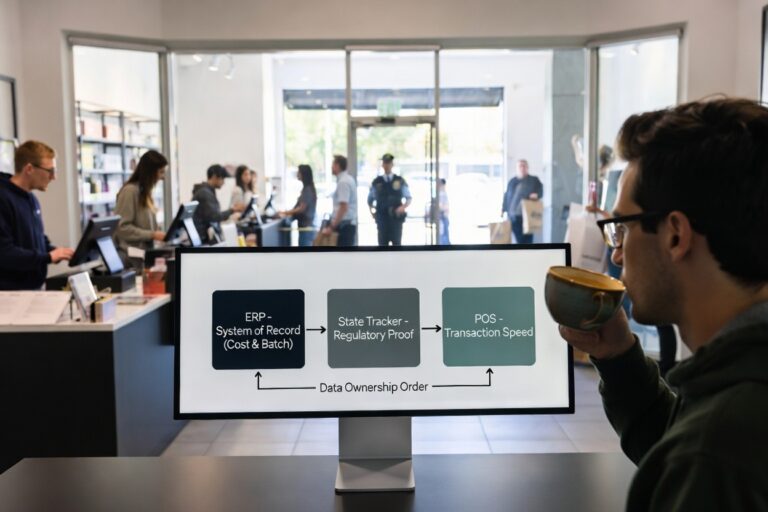
Getting every vendor ready at the same time. Your POS, ERP, and anything else connected all need updated links to the new system, and often some updated internal logic too. This step gets underestimated more than any other, since it depends on your vendors being ready, not just you.


The bottom line
Neither Metrc nor BioTrack is simply better in a way that should drive big decisions, mostly because you don’t get to pick anyway. What matters is treating whichever system you’re on as a core part of your business, worth the same care as your accounting software, not as background noise that runs itself.
If you’re facing a mandated switch between the two, the prep work matters far more than which direction you’re switching. Clean master data, real staff training, vendor coordination, and a rollback plan are what decide whether your migration is a manageable Tuesday or a multi week headache.