How Dutch Greenhouse Technology Is Reshaping Cannabis Cultivation
Drive through the Westland region of the Netherlands and you pass more glass than anywhere else on Earth. This narrow strip between Rotterdam and The Hague holds one of the densest clusters of greenhouse farming in the world. The companies based there supply climate control, irrigation, and growing know-how to commercial horticulture on every continent.
Cannabis is simply their newest crop. That framing matters more than it sounds.
The cannabis industry has spent a decade telling itself that cultivation technology needs to be built from scratch for cannabis. The Dutch horticulture sector sees it differently. The hard problems, precise climate control, water and nutrient management at scale, sensor networks that actually inform decisions, were solved years ago for tomatoes, peppers, and ornamentals. What cannabis needs is adaptation, not invention.
Sixty years of solving the same problems
Controlled environment agriculture, known as CEA, is the practice of growing crops in fully managed conditions: temperature, humidity, CO2, light, irrigation, and nutrition all watched and adjusted around the clock. Dutch firms have spent six decades refining this, pushed by a simple fact: the Netherlands has expensive land, expensive energy, and limited sunlight, yet it became one of the world’s largest agricultural exporters. That only happens through relentless efficiency.
Two companies anchor this world for cannabis operators weighing their options.
Priva, based in De Lier, builds climate computers and process control systems that run a large share of the world’s commercial greenhouses. Its systems pull climate, irrigation, and energy management into one control layer, the operational nervous system of a modern greenhouse. In cannabis, Priva technology usually arrives through specialist integrators who set it up for the crop’s particular needs: tighter humidity bands to manage mold risk, stage specific light and temperature plans, and room level zoning that indoor cannabis facilities require.
Hoogendoorn Growth Management, based in Vlaardingen, takes a different approach it calls Plant Empowerment. Growing decisions follow the plant’s own balances, meaning its energy, water, and assimilates, rather than fixed setpoints. Instead of holding a room at a set temperature because a cultivation procedure says so, the system reads what the plant is actually doing and adjusts. Hoogendoorn has been openly active in cannabis, and its technology runs in purpose built Dutch style cannabis greenhouses in North America, including large glass facilities designed around natural light backed up by precise climate control.
Both companies sit inside a wider movement. After university led cannabis cultivation trials in the Netherlands showed what professional horticulture methods could do for the crop, a group of Dutch horticultural suppliers, the Legal Cannabis Coalition, formed to bring the sector’s collective know-how into legal cannabis markets. Climate systems, screens, lighting, irrigation, substrates, labor management: the whole supply chain, packaged for a new industry.
Why glass beats the bunker
The dominant cannabis cultivation model, especially in North America, has been the sealed indoor room: no natural light, full HVAC, high intensity lighting. It grew out of prohibition, since grows had to be hidden, and stuck around because it offers total control.
It is also brutally expensive. Lighting and climate control make indoor cannabis one of the most energy hungry crops in agriculture, and as European markets mature under price pressure, that cost structure gets harder to defend.
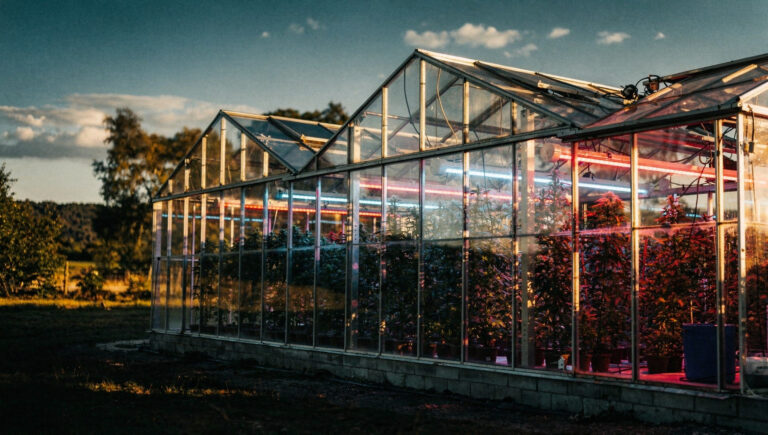
The Dutch model, high tech glass greenhouses using sunlight as the main light source, with backup lighting, energy screens, and semi closed climate systems filling the gaps, cuts energy use sharply while keeping most of the consistency that pharmaceutical grade and GMP oriented production demands. For German cultivation associations and EU medical producers building infrastructure from scratch, this is the live question: build a bunker, or build a greenhouse?
The honest answer depends on scale, capital, and regulatory setting. A hybrid glass facility costs more upfront than retrofitting a warehouse, and it demands real horticultural skill to run. A sealed room forgives inexperience in ways a dynamic greenhouse does not. But at scale, over several years, the running cost advantage adds up. The Dutch have the spreadsheets from sixty years of running the numbers.
What the legacy actually delivers and what it doesn’t
Here is where operator skepticism is fair, and where we’ll apply it.
What transfers directly: Climate control, irrigation and fertigation, energy management, and sensor infrastructure work the same regardless of crop, at the systems level. A Priva or Hoogendoorn installation brings hardware reliability and control software proven across thousands of sites. This is not startup technology that might not exist in three years, a real concern in cannabis, where vendor churn has burned plenty of operators.
What needs adaptation: Cannabis specific crop knowledge inside these systems is still young. Decades of tomato data mean the tomato models are excellent. Cannabis crop models, the growth curves, climate responses, and strain level differences that let a system move from watching toward genuinely running itself, are still being built. Companies that won autonomous greenhouse competitions with other crops have said they’re willing to build cannabis models, but willing to build is not the same as built and proven. Operators should ask vendors directly: what cannabis installations are running today, and what results can you show me?
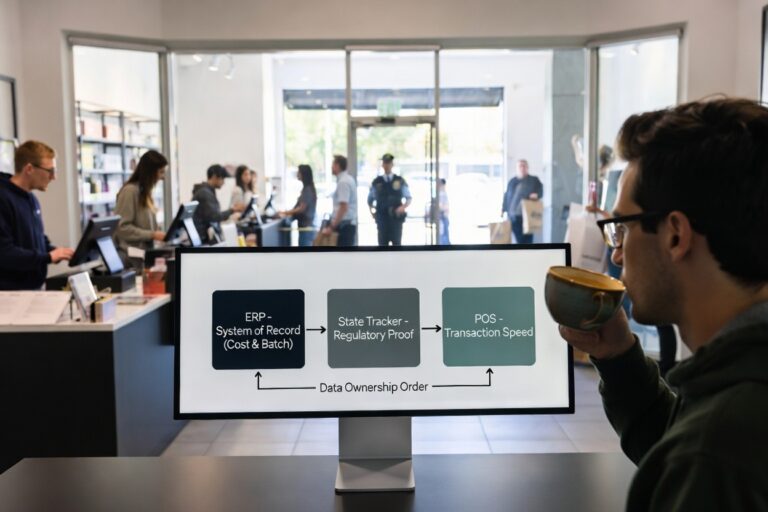
What doesn’t come in the box: Compliance. Dutch climate systems were built for markets where nobody demands seed to sale tracking or batch level regulatory paperwork. Connecting cultivation control with track and trace, GMP documentation, and ERP systems is still the operator’s problem to solve, usually through integrators, middleware, or manual work. It’s a real gap, and one of the clearer opportunities in cannabis technology right now.
The takeaway for operators
The entry of established Dutch horticulture into cannabis is one of the most consequential technology shifts in the industry — precisely because it isn’t flashy. It represents cannabis cultivation being absorbed into professional agriculture: proven systems, long-lived vendors, and an efficiency discipline the industry needs as prices normalize.
For European operators making infrastructure decisions now, three practical points:
First, evaluate cultivation technology on horticultural merit, not cannabis branding. A system proven across thousands of commercial greenhouses is a fundamentally different risk profile than one proven in a pitch deck.
Second, budget for expertise, not just equipment. Dutch-style growing is knowledge-intensive. The technology amplifies a skilled grower; it does not replace one.
Third, plan the compliance integration early. The climate computer and the track-and-trace system will not talk to each other out of the box. Knowing that before installation is much cheaper than discovering it after.
The smartest cannabis cultivation technology wasn’t built for cannabis. It was built over sixty years, for crops with thinner margins and fewer excuses. Cannabis is just the latest beneficiary — for operators willing to learn from an industry that solved these problems first.
cannAItech explores practical future technology for regulated cannabis markets. If you’re deploying cultivation technology in regulated markets, we want to hear about it: [email protected].