
Germany’s €2 Billion Cannabis Market: What the Numbers Tell Us About Tech Demand
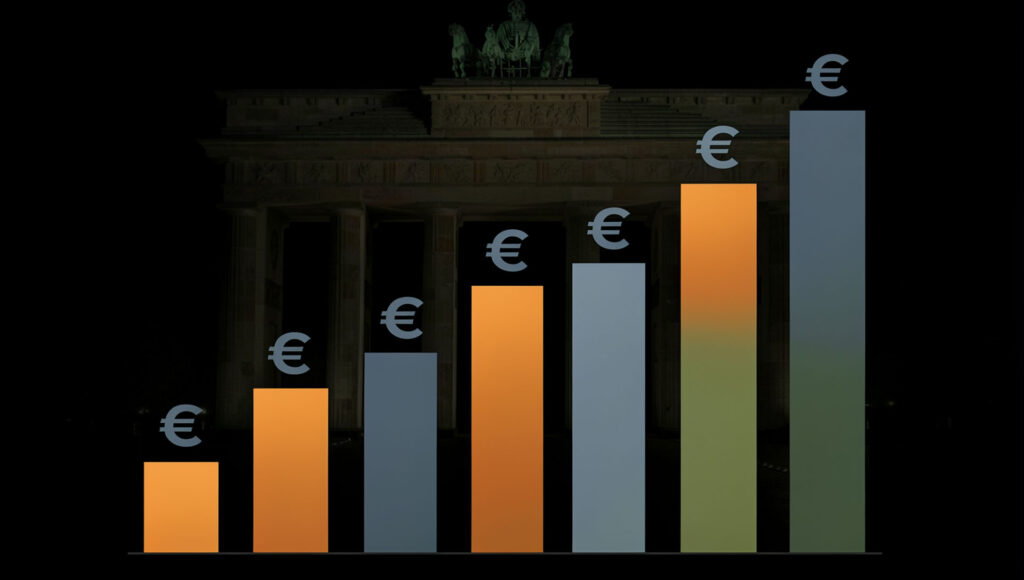
Germany’s cannabis market didn’t grow in 2025. It doubled. According to the BPC, the German association of pharmaceutical cannabinoid companies, legal medical cannabis sales jumped from nearly €1 billion in 2024 to roughly €2 billion in 2025, a pace that caught even the optimists off guard. That figure covers medical sales through pharmacies. It does not include cultivation associations, home growing, or the grey market.
Behind that headline number sits a set of data points that, taken together, paint a clear picture of where technology demand is heading in Europe’s largest cannabis market. Each number points to a specific infrastructure gap. Understanding those gaps is the first step to understanding what cannabis technology companies should actually be building for this market.
455 cultivation associations, each needing a technology stack
As of summer 2026, local authorities had approved 455 cultivation associations out of 896 applications filed, according to the Federal Association of Cannabis Cultivation Associations. Approval rates vary sharply by state. North Rhine-Westphalia leads. Bavaria, whose state government announced before the law took effect that it would read it as restrictively as possible, remains at the other end of the table.
Each approved association needs, at minimum, a climate control system for its growing facility, a member management platform (tracking the legal maximum of 500 members per club, possession limits, and age verification), a seed to harvest tracking system to meet regulatory reporting rules, and basic financial management tools.
That’s 455 separate organizations, most of them small, underfunded, and run by volunteers, all needing to buy and run technology they likely have no experience with. This is not a market for enterprise sales cycles and six figure contracts. It’s a market for accessible, affordable, well documented tools that non technical users can actually run.
The technology companies most likely to win this market are the ones that understand cooperative and association structures, offer German language support, price for small organizations rather than commercial enterprises, and can show compliance with German data protection rules from day one.
More than 200 tonnes imported and a testing bottleneck
Germany imported 201,094 kg of medical cannabis in 2025 according to BfArM, more than six times the 32 tonnes recorded in 2023. Canada supplied about 46 percent of it and Portugal roughly 29 percent, while domestic production covered less than 3 percent. Demand outran the rules along the way: the original import cap of 122 tonnes ran out by September, approvals were paused, and the ceiling was lifted to 192.5 tonnes in October. Imports still closed the year above it.
That surge has now levelled off. Germany imported 50,539 kg in the first quarter of 2026, down roughly 15 percent on the previous quarter and the first real decline since the law changed. Prices are falling alongside it: Bloomwell’s survey of 3,528 patients put average flower prices at €4.52 per gram in March 2026, down from €5.23 in December 2025. Falling prices in a maturing market are normal, but they change what technology has to do. Operators buying during a doubling buy for growth. Operators buying during a plateau buy for margin, and margin arguments are won on integration, labour cost and error rates rather than on features.
Every gram of that imported cannabis needs testing: potency analysis, contaminant screening, microbial testing, pesticide residue analysis, and heavy metals testing. The instruments for this work (HPLC, ICP-MS, qPCR, GC-FID systems from companies like Thermo Fisher Scientific, Agilent, and Waters) are well established. What’s less established is the lab information management infrastructure needed to process this volume efficiently.
At more than 200 tonnes a year, Germany’s cannabis testing labs face a level of pressure that manual work can’t keep up with. LIMS (Laboratory Information Management Systems), automated sample prep, and machine learning assisted spectral analysis aren’t luxuries for these labs. They’re necessities driven by sheer volume.
The testing bottleneck is arguably the most immediate technology opportunity in the German market, because it’s driven by regulatory demand rather than operator choice. Every import must be tested. Every import must be tested, whether volumes rise or fall. The labs need faster tools.
4.5 million consumers and a medical patient base approaching a million
An estimated 4.5 million Germans use cannabis. The medical patient base is harder to pin down, because Germany keeps no central patient registry, but industry estimates now run close to or above one million, up from roughly 250,000 in April 2024. Bloomwell’s Cannabis Barometer recorded a 3,300 percent rise in prescriptions between March 2024 and December 2025. The April 2024 reclassification, which took cannabis off Germany’s narcotics schedule and made prescribing simpler, drove most of that.
For technology companies, the medical patient base is a distinct market with its own needs: prescription management systems, pharmacy dispensing platforms, patient tracking databases, and telehealth infrastructure for cannabis consultations. The stalled MedCanG amendment, which would require an in-person visit before a first prescription and limit remote repeats to patients seen within the previous four quarters, would add administrative load for prescribers and pharmacies if it ever passes, creating more demand for workflow automation.
The recreational consumer base, meanwhile, gets cannabis mainly through social clubs and, increasingly, through a grey market online scene that Bloomberg recently covered. Technology serving this group needs to handle member communication, event coordination, cultivation scheduling, and harvest distribution: cooperative management tools built for a cannabis setting.
The political landscape is complicated but stable
The CDU/CSU led coalition that formed after the February 2025 elections did not repeal cannabis legalization, a real relief for an industry that had feared exactly that. Instead, the coalition agreed to an open ended evaluation of the Cannabis Act. It was originally set for autumn 2025, has slipped repeatedly, and has still not landed.
This political reality has a specific technology implication: uncertainty drives demand for flexibility. Operators need systems that can adapt to regulatory change without a full rebuild. Modular platforms with adjustable compliance rules will outperform rigid systems built around one reading of current law.
The MedCanG amendment adds another layer, though it has stalled. The Federal Cabinet approved it on 8 October 2025 and the Bundestag held a first reading on 18 December, but it has not moved to the second and third readings needed to become law. Telemedicine prescribing and pharmacy mail-order both remain legal. The bill would require an in-person consultation before a first prescription, limit remote repeat prescriptions to patients seen in person within the previous four quarters, and ban mail-order supply of cannabis flower. SPD members have publicly called the draft unacceptable, which is a fair part of why it has gone nowhere. Technology companies building for the German medical market should treat the outcome as open rather than imminent, and build workflows that survive either result.
Commercial sales remain stalled which is actually an opportunity
Pillar 2 of Germany’s cannabis framework, the commercial pilot program for regulated retail sales, has not launched. Rollout is now projected for late 2026 or more likely 2027 at the earliest, and as of summer 2026 no pilot projects have received full federal approval.
For technology companies, this delay is good news in disguise. It means the commercial retail infrastructure hasn’t been built yet. Point of sale systems, inventory management platforms, customer verification tools, delivery logistics software, and retail analytics: none of it has been chosen, bought, or deployed at scale in Germany.
When Pillar 2 finally launches, the technology demand will arrive all at once. Companies with an established presence, real relationships with operators, and a track record in the Pillar 1 (social club and medical) environment will have a clear edge once commercial specifications land.
The window between now and Pillar 2 launch is the window to get positioned. Technology companies entering the German market today aren’t late. They’re early for the bigger opportunity still coming.
What the full picture tells us
Germany’s medical cannabis sales doubled to €2 billion without any commercial retail, with cultivation associations still coming online, and under a framework still being revised. The growth came almost entirely from medical expansion and the end of narcotics scheduling.
Volumes have since flattened. The infrastructure gaps have not closed. Commercial retail has not been built. Most associations are running on tools never designed for them. Testing capacity is set by regulation rather than by demand. Each of those is a technology requirement that exists whether or not the next quarter grows, and a flat market makes them more pressing rather than less, because operators can no longer cover inefficiency with volume.
For technology providers eyeing the European cannabis market, Germany offers three things no other European market currently does: scale (83 million people), regulatory momentum (legalization survived a change of government), and an established industry conference scene where relationships get built efficiently.
The companies that succeed here won’t be the ones with the flashiest technology. They’ll be the ones that understand cooperative structures, speak German, price for small organizations, and can adapt to regulatory change measured in months, not years.
The technology demand is real. The open question is whether the technology supply will match what operators actually need.
cannAItech explores practical future technology for regulated cannabis markets.