The AI Maturity Matrix: Where Cannabis AI Actually Works in 2026
A plain-language look at six AI applications in cannabis, rated by how mature they really are, with real deployments and results behind each rating.
Ask ten cannabis technology vendors if their product uses AI (artificial intelligence, meaning software that can learn patterns from data instead of just following fixed rules), and nine will say yes right away. Ask what that AI actually does in a working facility, backed by real numbers, and most go quiet.
That’s the problem with a lot of cannabis tech coverage right now. Every product launch waves the AI flag. Almost nobody checks whether the flag is attached to anything real.
So we built a maturity matrix. Six areas where AI is supposedly changing how cannabis gets grown, tested, sold, and regulated. Each one gets a grade based on what’s actually deployed and measured, not what sounds good in a pitch deck.
How we’re grading this
01
Research
The science is genuinely promising, but what exists today lives mostly in a lab, not on a grow room floor.
02
Pilot
It works, it’s out in the field, and it’s producing real results, but the cannabis-specific version is still getting kinks worked out.
03
Production
The tech runs at real scale, the results are measured (not guessed at), and it rarely breaks in ways that surprise anyone.
Here’s where six major cannabis AI applications actually land.
Regulatory compliance automation: Production
This is the most mature AI use case in cannabis, and oddly enough it’s the one nobody thinks to call “AI” because it isn’t flashy. Platforms like Cannavigia and GrowerIQ use something called NLP (natural language processing, a fancy way of saying software that can read and understand written text) to scan regulatory documents and flag when your internal procedures fall out of step with current law.
None of this is new science. Financial services and healthcare companies have used rule-based compliance automation for well over a decade. Cannabis borrowed a proven tool instead of inventing one from scratch. That’s exactly why it works so reliably.
The payoff is less time spent prepping for audits and fewer compliance headaches. It’s not glamorous. It’s also one of the few places where AI hype and AI reality match up.

Customer identity verification: Production
Age verification at cannabis retail runs on technology lifted straight from online banking and gambling platforms, industries that have spent enormous money fighting fraud and have the data to show for it. Companies like Jumio and Sumsub can verify a customer’s age and identity in under a minute using facial recognition and government ID checks.
This one’s about as close to a solved problem as AI gets anywhere in regulated retail. Nobody’s beta testing this. It’s been stress tested by industries with a lot more on the line than a cannabis dispensary, and cannabis just gets to use the finished product.
Autonomous environmental steering: Production for vegetables, Pilot for cannabis
Here’s the most interesting one on the list, because the exact same technology gets two different grades depending on what you’re growing.
Systems like Blue Radix’s Crop Controller and Source.ag’s Source Workspace run software that automatically adjusts a greenhouse’s temperature, humidity, CO2, and lighting in real time. Blue Radix alone runs in more than 100 commercial greenhouses worldwide, mostly growing tomatoes, peppers, and flowers, with reported energy savings of 15 to 25 percent. For those crops, this is clearly production-ready technology.
Point that same system at cannabis and it slides back to pilot status. The algorithm isn’t worse. Cannabis just breathes differently than a tomato plant, and there’s far more variation from one cannabis strain to the next than there is between one tomato and another. So the model has to be retrained and fine tuned for nearly every cannabis operation, in a way tomato growers never have to think about.
This matters if you’re an operator listening to a sales pitch. “Deployed in 100 plus commercial greenhouses” is true. Whether that experience carries over cleanly to your cannabis room is a separate question worth asking directly.
Demand and yield forecasting: Pilot
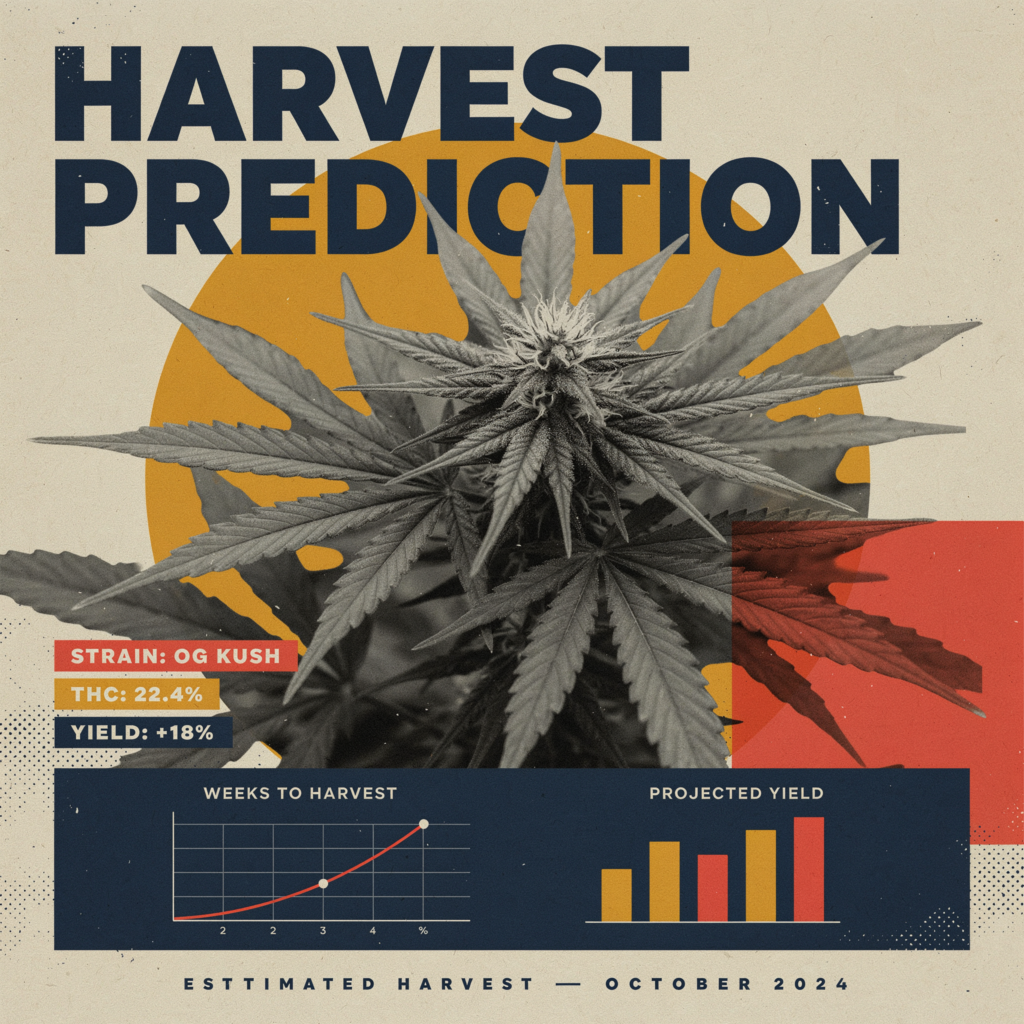
Platforms like Hexafarms use machine learning to predict harvest weights four to eight weeks out, with reported accuracy as high as 95 percent. That’s a great number.
The catch is that cannabis has far more genetic variety than most crops, and forecasting accuracy depends a lot on how much historical data exists for your specific strain in your specific facility. A model might nail it on a strain that’s been grown a thousand times before and stumble on something newer with a thinner track record.
If a vendor quotes you a headline accuracy number, a fair follow up question is simple: what’s the accuracy on your most common strains versus your rarest ones? That answer tells you more than the marketing slide does.

Computer vision for plant health: Pilot
Think of this as giving your grow room a very attentive pair of eyes that never blinks. Companies like Hexafarms and iUNU use deep learning (a type of AI that learns from thousands of example images, similar to how you’d eventually recognize a friend’s face in a crowd) to spot nutrient problems and pest outbreaks days before a human would notice anything wrong. Crop loss reductions are reported as high as 30 percent, though those numbers come from the companies selling the systems rather than from independent trials.
The core technology is mature. It’s been working in tomato and strawberry greenhouses for years. What’s still catching up is the training data specific to cannabis, since cannabis canopies are denser and more varied than most greenhouse crops, and it takes a lot of labeled photos to teach a computer the difference between early nutrient stress and an early pest problem.
Give this one a couple more years. It’s promising, just not finished yet, and any vendor who says otherwise is getting ahead of the actual science.
Genomics and breeding programs: Research
AI assisted breeding tries to connect a plant’s genetic markers to how it actually turns out: its cannabinoid levels, its terpene profile, its resistance to disease. Programs like Perfect Plants working with Wageningen University report cutting breeding cycles nearly in half.
This is real, published research, not vaporware. But it’s also expensive, specialized work that mostly happens inside research institutions and a handful of well funded genetics companies. Cannabinoid and terpene production involves a lot of interacting genes, which makes precise prediction a hard problem to crack. If someone offers you AI driven breeding as an off the shelf product, that’s worth a second look before you buy in.
Why any of this matters
Most cannabis coverage treats AI the way most industries treat AI right now: breathlessly, without asking which parts are real and which parts are still a work in progress. That’s not much help to an operator trying to spend real money wisely.
The maturity level should change how you shop. A Production tier tool can mostly be judged on price and how well it fits your existing setup, since you already know it works reliably. A Pilot tier tool deserves harder questions about training data and what happens when it hits a situation it’s never seen before. Treat a Research tier tool as exactly that: interesting, worth watching, not something to build next quarter’s budget around.
We’ll check back on this matrix every few months as things move. If a Pilot graduates to Production, or a vendor’s claims don’t hold up once we look closer, we’ll update it and say so plainly.
cannAItech explores practical future technology for regulated cannabis markets.